
Algo Trading
Learn Algo Trading with Python: A Complete Step by Step Roadmap

FabTrader
If you’ve ever searched “How do I learn Python for algo trading?”, you know the answers online can be overwhelming. Python is a massive language with countless applications — from web development to artificial intelligence, from automation to data science. But as an aspiring algo trader, you don’t need to master all of Python. What you need is a clear, focused path that teaches you just the essential parts of Python that directly apply to algorithmic trading.
That’s why I created this free mini-course.
Python is Vast - But We are here only for Algo Trading
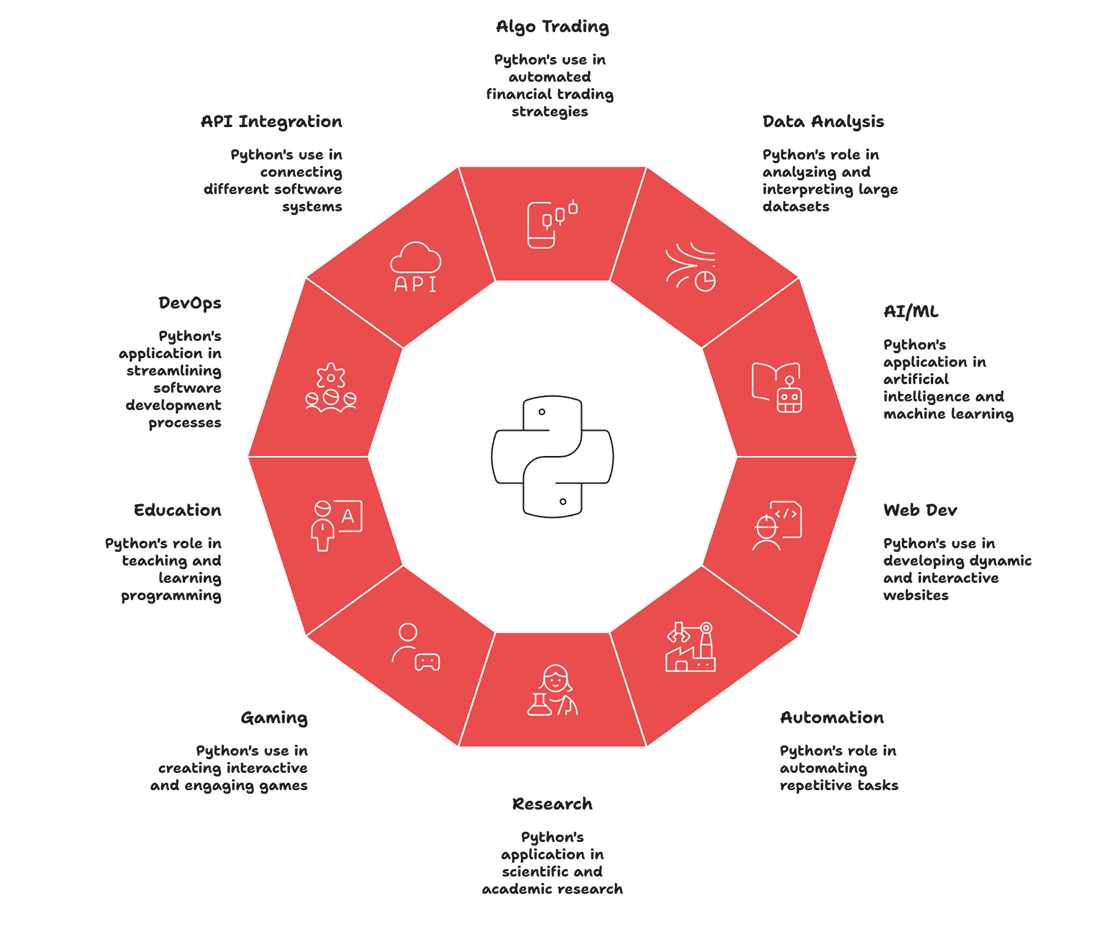
Over the years, I’ve had countless members of my community ask me the same question: “I’m new to Python and algo trading — where do I start?” Instead of pointing them to random tutorials or asking them to sift through thousands of hours of content, I decided to curate the best publicly available resources into a single, structured roadmap.
This course is designed to:
- Cut out the noise and show you only what matters for algo trading.
- Give you hands-on skills with Python in the shortest possible time.
- Take you step by step, starting from installing Python and your IDE, all the way to building trading strategies, backtesting them, and even automating trades.
I’ve personally reviewed hundreds of videos, tutorials, and books — and hand-picked the very best ones so you don’t have to waste time searching. Think of this as a “guided tour” where you get the right content, in the right order, to accelerate your learning journey.
Whether you’re a complete beginner or someone with a bit of programming background, this roadmap will help you gain the Python skills needed to confidently call yourself an algo trader. And the best part? It’s completely free.
Learning Roadmap
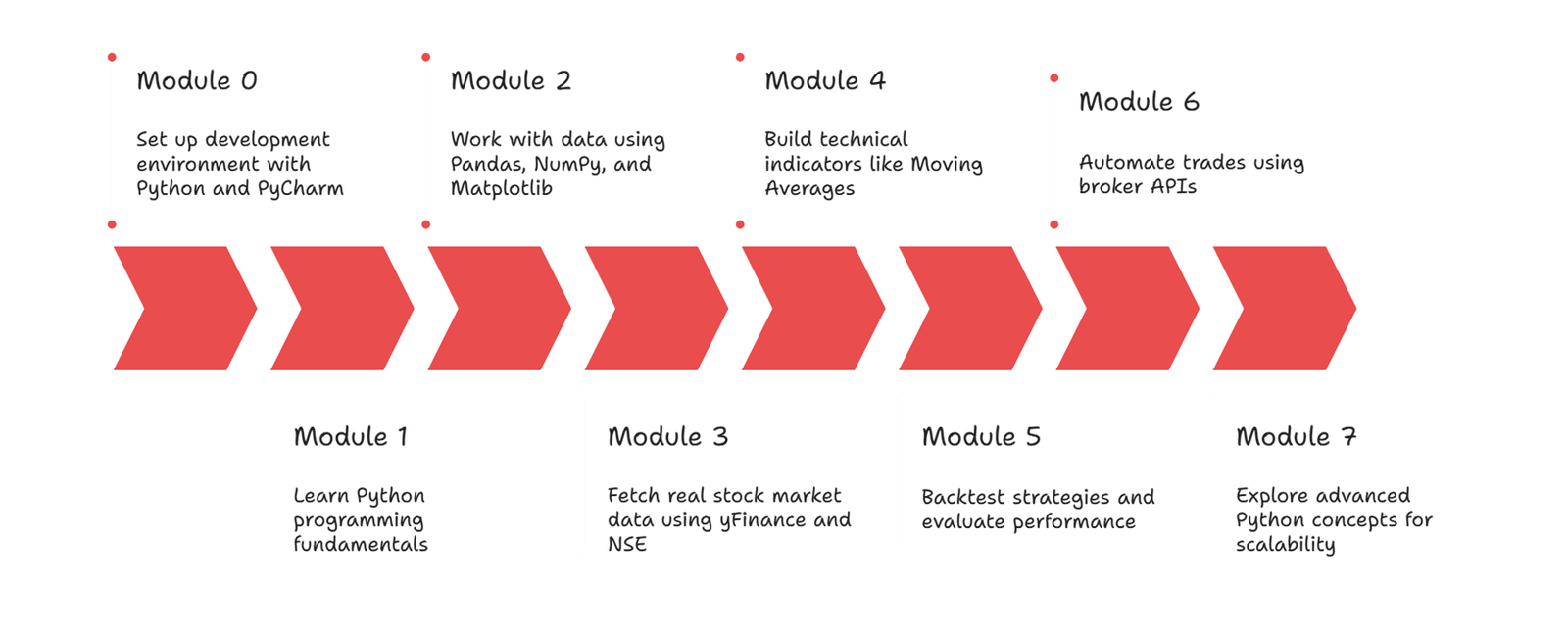
In this article, you’ll find:
- A step-by-step roadmap that mirrors the structure of the course.
- YouTube tutorials and reference materials carefully selected for each topic.
- A progression that builds your knowledge from the ground up — starting with Python basics and gradually moving into advanced algo trading concepts.
By the end of this journey, you’ll not only be comfortable coding in Python, but you’ll also know how to apply those skills to trading — downloading stock data, building technical indicators, backtesting strategies, and eventually automating your trades.
So let’s get started
Course : Python for Algo Trading
1. Welcome & Orientation
- Introduction to this Mini Course
2. Setting up Your Development Environment
- Install Python & PyCharm (Windows 11) → 📺 Watch
- Install Python & PyCharm (MacOS) → 📺 Watch
- Learn more about PyCharm → 📺 Watch
3. Python Programming Basics
- Variables: Strings → 📺 Watch
- Variables: Integers & Floats → 📺 Watch
- Lists & Tuples → 📺 Watch
- Dictionary → 📺 Watch
- Conditional Statements → 📺 Watch
- Loops → 📺 Watch
- Handling Exceptions → 📺 Watch
- Functions & Parameters → 📺 Watch
- Modules & Imports → 📺 Watch
- Working with Files → 📺 Watch
4. Data Handling and Presentation
- Using JSON files → 📺 Watch
Pandas
- Getting Started → 📺 Watch
- DataFrame & Series Basics → 📺 Watch
- Indexes → 📺 Watch
- Filters & Conditions → 📺 Watch
- Modifying DataFrames → 📺 Watch
- Additions & Deletions → 📺 Watch
- Sorting Data → 📺 Watch
- Grouping & Aggregation → 📺 Watch
- Cleaning Data → 📺 Watch
- Dates & Times → 📺 Watch
- Reading & Writing DataFrames → 📺 Watch
Matplotlib
NumPy
- NumPy Basics → 📺 Watch
5. Download Stock Market Data
6. Technical Indicators
7. Strategy Backtesting
8. Backtesting Performance Metrics
- Understanding Strategy Performance → 📺 Watch
9. Automating Trades
10. Broker API
- Zerodha API Introduction → 📺 Watch
11. Advanced Concepts: Object Oriented Programming
- Classes & Instances → 📺 Watch
- Class Variables → 📺 Watch
- Class & Static Methods → 📺 Watch
- Special Methods → 📺 Watch
- Decorators → 📺 Watch
12. Miscellaneous
13. Other References
Who This Course Is For
- Absolute beginners in Python
- Traders new to algorithmic trading
- Developers looking to apply coding to finance
- Anyone who wants a clear, no-fluff roadmap
Important Note: This roadmap uses publicly available resources. Full credit goes to the original content creators. FabTrader does not endorse or own the linked videos. This blog is for educational purposes only and does not provide financial advice. Trading involves risk — always do your own research or consult a qualified advisor.
👉 That’s the complete roadmap! Bookmark this page and start learning step by step.
If you find better resources or want to share feedback, email me at [email protected].
Frequently Asked Questions (FAQs)
1. Do I need to learn all of Python to start with algo trading?
No. Python is a huge language with many use cases like web development, data science, and AI. But for algo trading, you only need to focus on specific areas such as data handling (Pandas, NumPy), financial data access, strategy backtesting, and automation. This roadmap covers exactly those essentials.
2. I’m a complete beginner in programming. Can I still learn algo trading with Python?
Absolutely. This course starts with the very basics — installing Python and your IDE, writing your first script, and learning about variables, loops, and functions. Each step builds gradually so even beginners can follow along without feeling overwhelmed.
3. Which IDE should I use for algo trading in Python?
We recommend PyCharm because it’s professional, reliable, and widely used in the industry. However, other IDEs like VS Code or Jupyter Notebook also work well. The roadmap includes dedicated lessons on setting up PyCharm to get you started.
4. Where can I get stock market data in Python?
There are multiple options. In this roadmap, we use Yahoo Finance (yFinance) and the NSE website to fetch both historical and real-time market data. These are beginner-friendly and widely used in the algo trading community.
5. What technical indicators can I build with Python?
You can build popular indicators like Moving Averages, RSI (Relative Strength Index), MACD, Bollinger Bands, and more using libraries like Pandas and NumPy. The roadmap includes lessons dedicated to building and customizing these indicators.
6. How do I backtest my trading strategies in Python?
Backtesting is done by applying your trading strategy to historical data and analyzing its performance. This course covers both writing your own backtesting logic and using existing Python backtesting frameworks to measure performance metrics.
7. Can I automate live trading using Python?
Yes. Once you’ve learned the basics and backtested your strategy, you can connect to your broker’s API (such as Zerodha KiteConnect) and place live trades automatically. The roadmap includes lessons on automation and APIs to help you transition from backtesting to live markets.
8. Do I need prior trading knowledge before learning this course?
Having some basic understanding of markets, trading, and financial terms helps, but it’s not mandatory. This roadmap is designed to teach you both Python concepts and their direct application in trading.
9. Is this course free?
Yes. All resources included here are free and publicly available on platforms like YouTube and GitHub. This course simply curates the best resources and organizes them into a structured learning path.
10. How long will it take to complete this roadmap?
That depends on your pace. If you dedicate 5–7 hours per week, you can cover the basics in about 6–8 weeks and start building simple strategies. With consistent practice, you’ll be comfortable with Python for algo trading in 3–4 months.
More from Algo Trading
Algo Trading Cost in India: How I Built a Reliable Setup for ₹150/Month
Wondering how much algo trading costs in India? In this article, I break down the real expenses involved in running an algorithmic...
When Your Job Feels Shaky: Can Trading Become an Alternate Income Stream?
Can trading become a stable source of income in India? While many consider it during times of job uncertainty, the reality is...
How Much Capital Do You Really Need for Sustainable Trading Income in India?
How much capital is needed for sustainable trading income in India? This in-depth guide explores the realistic returns traders can expect, the...