
F.I.R.E
Retirement Crisis in India: Health Vs Life Span Gap

FabTrader
When most Indians think about financial freedom or early retirement, the conversation revolves around one key question: “How much corpus do I need to live until I die?” But what if we told you that the more critical question is not how long you will live, but how well you will live in your later years?
In India, where the average life expectancy is 72.5 years (men: 70.95, women: 74.13), the untold story is that the average healthy life expectancy is only 58.1 years.[1] That leaves a worrying gap of over 14 years potentially spent in ill health, dependency, or disability.[1][3] Yet, most retirement plans ignore this vital dimension: the healthspan-lifespan gap.
Let’s get granular and practical about what this means and how Indians, whether in their 20s, 40s, or already retired, can proactively prepare to close this gap—not just financially, but in health and autonomy.
The Indian Reality: Why Health Span Matters
India is undergoing a dramatic demographic shift. By 2050, over 300 million Indians will be over 60 years old—almost 20% of the population.[2] Coupled with this is the alarming rise of chronic, non-communicable diseases (NCDs) like diabetes, hypertension, cardiovascular disease, and arthritis.[9] These are no longer “old age” problems but are affecting Indians as early as their 40s and 50s.
Worse still, many retirees in India face mobility loss, cognitive decline, and social isolation, often without adequate preventive health measures or a support system.[2][10] The standard financial retirement plan doesn’t account for these realities.
Actionable Strategies to Shrink the Health Span – Lifespan Gap
1️⃣ Early Preventive Healthcare is Non-Negotiable
Waiting for symptoms to show before getting health check-ups is a recipe for disaster. Indians should start annual health screenings from their 30s, specifically for:
- Diabetes and pre-diabetes markers
- Cardiac health (cholesterol, ECG, stress test)
- Cancer screenings (especially oral, breast, and cervical cancer common in India)[8]
✔ Action Tip: Make it a calendar ritual. Book annual health check-ups before you turn 35.
2️⃣ Don’t Wait to Move: Build Sustainable Physical Activity Habits
The average Indian walks just 4,000 steps a day, compared to over 6,000 in longer-living populations like Japan and Italy.[8] Combine that with a sedentary desk-job culture and urban pollution, and the recipe for joint degeneration and poor cardiovascular health is complete.
🌱 Action Tip:
- Start with small changes: Add a 20-minute walk post-lunch or adopt simple yoga routines.
- For desk workers, set an hourly reminder to stand up and stretch.
- In your 40s or beyond, focus on low-impact strength training to preserve muscle mass and bone density.
3️⃣ Mental Health Isn’t Optional
Changing family structures and urban migration leave many elderly Indians vulnerable to loneliness and depression, a risk factor rarely incorporated into retirement planning.[10] Mental health maintenance is as important as physical health.
🌱 Action Tip:
- Build and sustain a circle of friends and hobbies now. Learn something new every year.
- Embrace volunteer work or community service, which is proven to enhance purpose and mental resilience.
4️⃣ Integrate Financial and Health Planning
Most Indian retirees plan for living expenses but neglect to account for medical inflation and long-term care. According to the Economic Times, medical inflation in India averages 10% per annum, far outpacing general inflation.[2]
💡 Action Tip:
- Opt for comprehensive health insurance that covers chronic disease management (not just hospitalization).
- Factor in home-based elder care services in your financial plan.
- Build a contingency fund exclusively for medical emergencies.
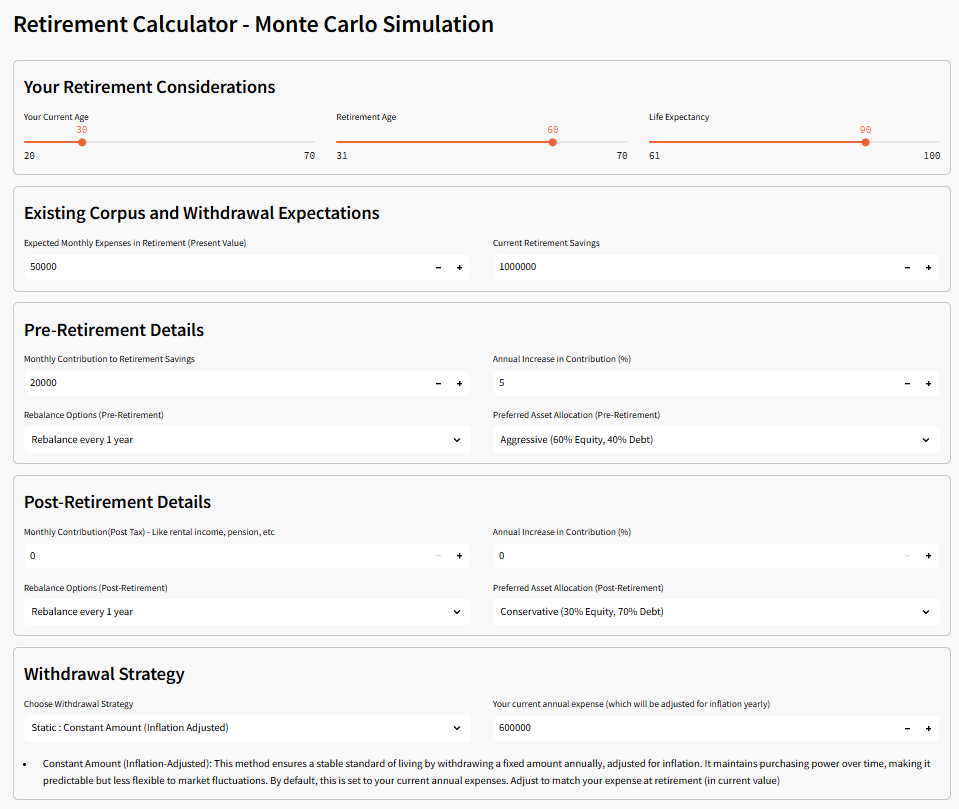
In case you are wondering how to plan your financials or not sure if your corpus would last your life span, checkout the free Retirement Calculator (Monte Carlo) on our Tools page.
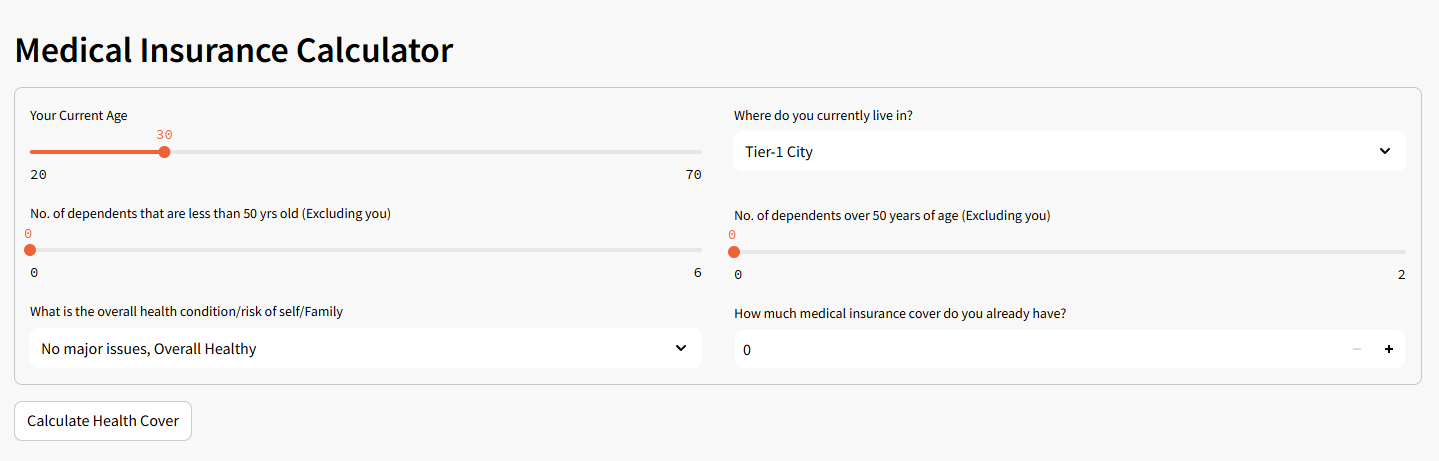
Or if you are unsure how much Medical insurance you and your family would need, you can check out the Free Health insurance Cover calculator on our tools page.
5️⃣ Plan Family Conversations Today
Few Indian families talk openly about caregiving responsibilities, end-of-life wishes, or financial planning for health contingencies.
✔ Action Tip:
- Have candid discussions with your spouse, children, and siblings about caregiving plans.
- Consider legal documents such as healthcare proxies and power of attorney in your early 50s.
Thoughtful Life Design Over Mere Number Crunching
True financial freedom is about more than a fat corpus; it’s about ensuring those later years are lived with dignity, mobility, purpose, and independence.
A thoughtful retirement plan for Indians must include:
- Proactive health measures
- Mental wellness routines
- Purpose-driven social engagement
- Realistic financial forecasting including medical inflation
The faster we accept that a golden retirement is not just about how long we live but how well, the smarter our decisions will be—whether we’re just starting our career or already preparing to hang up the boots.
👉 The biggest takeaway: Every small, healthy habit and well-informed financial decision today is a down payment toward reducing the healthspan-lifespan gap tomorrow.
For those aspiring for early or dignified retirement in India, it’s time to think deeper. Not just about how much wealth you build, but how well you nurture your health and relationships to truly enjoy the freedom you worked so hard to earn.
List of References
WHO – Life Expectancy and Healthy Life Expectancy (HALE) Data
Challenges Faced by Senior Citizens in India – CFYI
Care Insurance Blog – Most Common Health Concerns for Senior Citizens
Worldometers – Life Expectancy by Country
Wikipedia – Indian States by Life Expectancy at Birth
MapMyGenome – Why Do Indians Live Shorter Lives? Secrets to Longevity
Metropolis India – Common Health Problems in Elderly and How to Manage Them
AJ Hospital – Common Medical Conditions Faced by the Elderly
New Indian Express – Himachal and Punjab Surpass National Life Expectancy Average
Frequently Asked Questions (FAQs)
❓ What is the difference between life span and health span in retirement planning?
The life span refers to how long a person is expected to live, while the health span refers to how many of those years are lived in good health, free from major chronic diseases and functional disabilities. Most retirement plans focus only on life span, but in India, the health span averages just about 58 years, creating a significant gap that needs strategic attention.
❓ Why is health span important for Indians planning early retirement?
India faces a rising burden of chronic diseases such as diabetes, hypertension, and cardiovascular disease, often due to late diagnoses and lifestyle factors. Extending health span means not just living longer but maintaining physical and mental independence, which is crucial to enjoy retirement fully without being a financial or emotional burden on the family.
❓ How can I proactively improve my health span today?
Begin annual health screenings for diabetes, cancer, and heart disease well before symptoms emerge.
Incorporate regular physical activity like yoga, walking, or strength training into your routine.
Prioritize mental health by nurturing hobbies, social connections, and volunteering.
Ensure vaccinations and regular medical checkups as lifelong habits.
❓ What are common health risks Indians face as they age?
Key health risks include chronic illnesses like diabetes, hypertension, arthritis, cardiovascular diseases, and mobility issues due to joint degeneration. Mental health challenges such as depression and loneliness are increasingly common due to changing family structures and urbanization.
❓ How should my retirement plan reflect the health span gap?
Beyond planning for living expenses, account for rising medical costs, chronic disease management, and long-term care. Opt for comprehensive health insurance covering outpatient and chronic conditions, and maintain an emergency fund specifically for health-related contingencies.
❓ Are there government schemes in India to support senior citizens?
Yes, several schemes exist, such as the Indira Gandhi National Old Age Pension Scheme (IGNOAPS) and Ayushman Bharat health insurance program, aimed at providing financial and health support to senior citizens. Proactively researching and enrolling in these programs is critical.
❓ What role do family and social networks play in a healthy retirement?
Strong family ties and social engagement significantly improve mental health and reduce loneliness. Planning for intergenerational support, honest discussions about care expectations, and encouraging community activities contribute to a fulfilling, independent retirement.
More from F.I.R.E
The FIRE Dream in India Is Changing — And Most People Haven’t Realised It
India’s growth story looks stronger than ever on paper. But beneath the headlines, something important is changing for salaried professionals, investors, and...
The 4% Retirement Rule — Thumb Rule or Middle Finger?
The 4% rule has become the most recycled sentence in retirement planning. Simple. Confident. Comforting. And possibly dangerous. This is not an...